What is athlete’s foot?
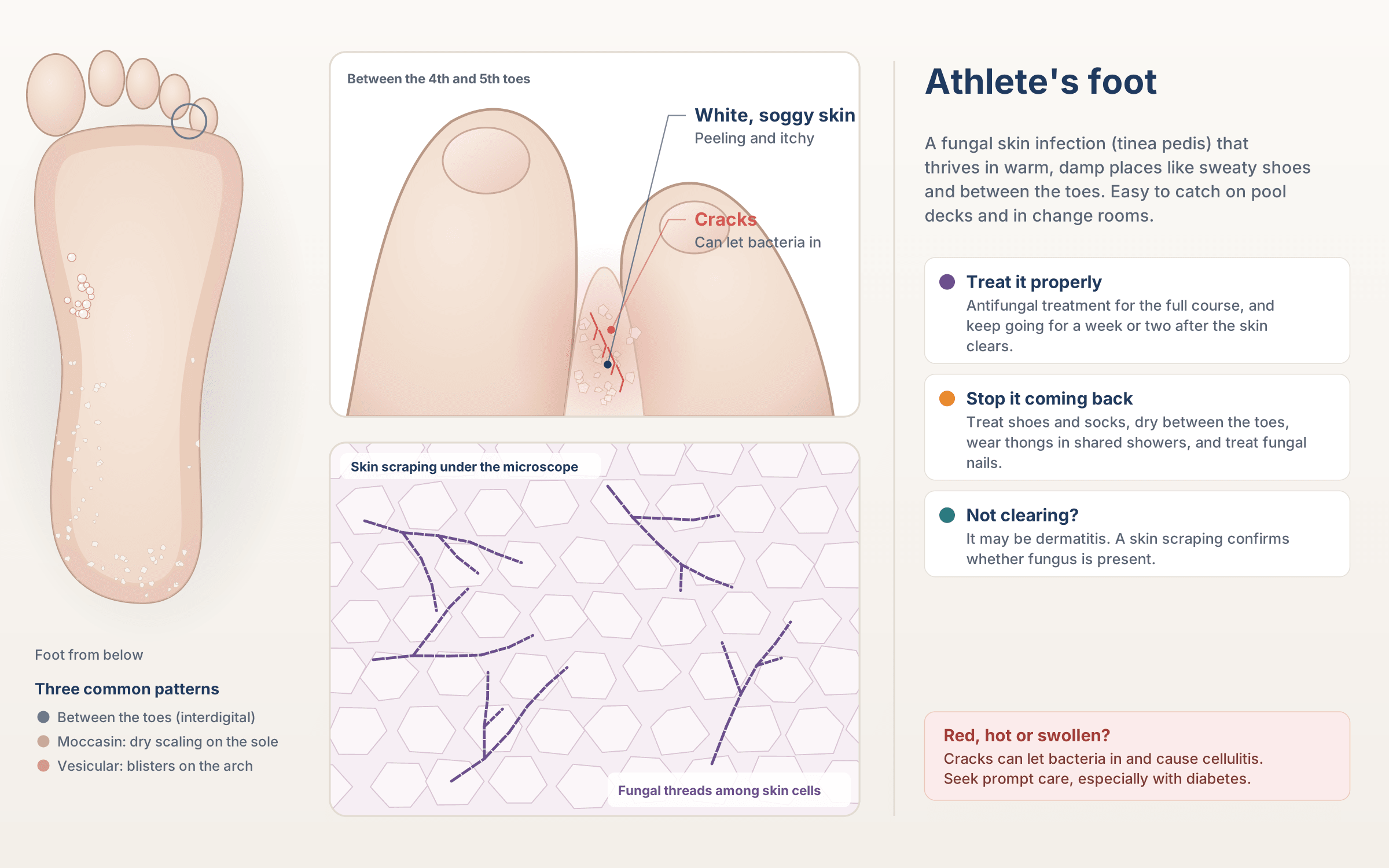
Athlete’s foot (tinea pedis) is a fungal infection of the skin of the feet. It’s caused by the same group of fungi (dermatophytes) that cause fungal nail infections and ringworm. The fungi feed on keratin in the outer layer of the skin and thrive in warm, dark, damp places, such as inside shoes and between the toes.
Types of athlete’s foot
- Interdigital (between the toes): the most common type, with itchy, peeling, white, soggy or cracked skin, usually between the fourth and fifth toes
- Moccasin type: dry, scaly, thickened skin across the sole, heel and sides of the foot, which can be mistaken for dry skin
- Vesicular type: small, itchy blisters, usually on the arch or instep
How do you catch athlete’s foot?
- Walking barefoot in communal areas, such as pool decks, change rooms, showers and gyms
- Sweaty feet and enclosed, non-breathable shoes
- Wearing damp socks or shoes
- Sharing towels, socks, shoes or nail clippers
- Having fungal nails, which can reinfect the skin
- Diabetes or a weakened immune system
Symptoms to look out for
- Itching, stinging or burning, especially between the toes
- Peeling, flaking or cracked skin
- White, soggy skin between the toes
- Dry, scaly skin on the soles and sides of the feet
- Small blisters
- An unpleasant smell
- Thickened, discoloured toenails, if the infection has spread to the nails
Seek prompt care if the skin becomes very red, hot, swollen or painful, or there’s pus, as cracks between the toes can let bacteria in and cause cellulitis. This is particularly important if you have diabetes or poor circulation.
How is athlete’s foot diagnosed?
Your podiatrist will examine the skin and toenails. Because dermatitis, psoriasis and other conditions can look very similar, we may take a skin scraping for testing, especially if the infection keeps coming back or hasn’t responded to treatment.
How we treat athlete’s foot
- Antifungal treatment: creams, sprays or powders, used for the full recommended time, usually continuing for a week or two after the skin looks clear
- Oral antifungals, for widespread, moccasin-type or stubborn infections, prescribed by our podiatrist endorsed for scheduled medicines in conjunction with your GP
- Treating the toenails, if they’re also infected, as fungal nails are a common source of reinfection
- Keeping the skin dry: drying carefully between the toes, and using drying agents for soggy skin
- Managing sweaty feet
- Dealing with your shoes and socks: antifungal powder or spray in shoes, washing socks hot, and rotating shoes so they dry out
Preventing athlete’s foot
- Dry your feet carefully, especially between the toes, after showering or swimming
- Wear thongs in communal showers, change rooms and around pools
- Change socks daily, or more often if your feet sweat, and choose breathable or moisture-wicking fabrics
- Rotate your shoes so each pair dries out between wears
- Don’t share towels, socks, shoes or nail clippers
- Treat fungal nails, so they don’t reinfect your skin
Athlete’s Foot (Tinea Pedis) FAQs
Common reasons are stopping treatment too early, fungal spores in shoes and socks, and untreated fungal nails reinfecting the skin. Treating all of these together helps stop it returning.
They can look alike. If antifungal creams haven’t helped, it may be dermatitis or another skin condition. A skin scraping can confirm whether fungus is present.
Yes. Untreated athlete’s foot can spread to the toenails, causing a fungal nail infection, which is slower and harder to treat.
Yes. It spreads through direct contact and from shared floors, towels and shoes. Wearing thongs in shared areas and not sharing towels helps protect others.
No, you can book directly. If your appointment is through a Medicare care plan, DVA or another funded program, you’ll need a referral, so check with us when you book.
Serving Manly and the Northern Beaches.
Manly Foot Clinic is at Shop 3/3 Corrie Rd, North Manly NSW 2100. We see patients from Manly, Balgowlah, Freshwater, Dee Why and Brookvale through to Mosman, Neutral Bay, Chatswood and the wider North Shore.