What is gout?
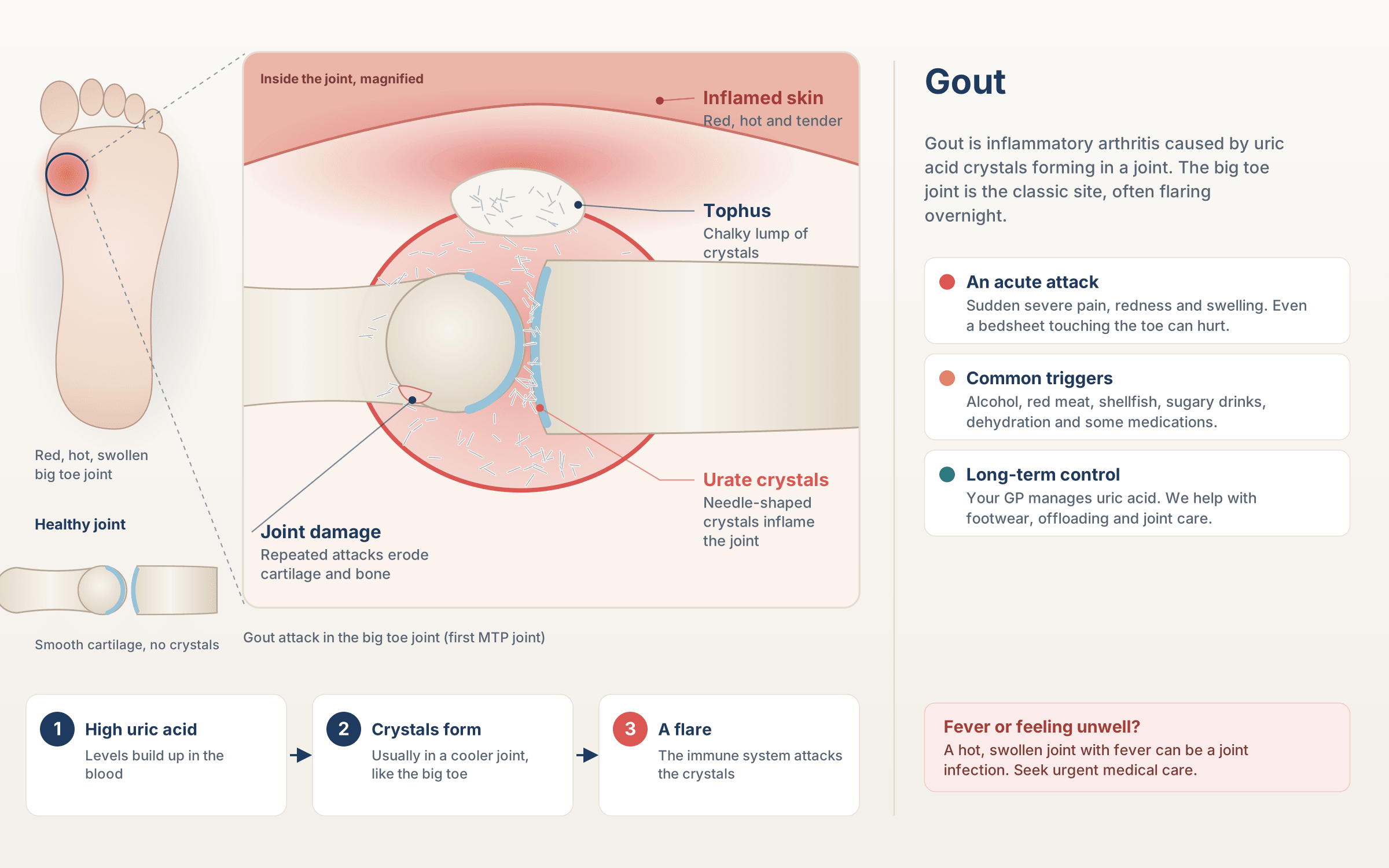
Gout is a type of inflammatory arthritis caused by too much uric acid in the blood. Uric acid is a normal waste product, but when levels are high, it can form sharp, needle-like crystals (monosodium urate) in and around the joints. The immune system attacks these crystals, causing sudden, intense inflammation.
The big toe joint (the first metatarsophalangeal joint) is the most common site, and a gout attack there is sometimes called podagra. Gout can also affect the midfoot, ankle, heel and knee.
How gout develops
- Acute attacks: sudden episodes of severe pain and swelling, often lasting 5 to 10 days
- Between attacks: usually no symptoms, but crystals may still be present
- Chronic gout: with repeated attacks, ongoing joint pain and damage can develop
- Tophi: firm, chalky lumps of uric acid crystals that can form under the skin, around joints and on the toes, heels and elbows
What causes gout?
Gout happens when the body makes too much uric acid or doesn’t get rid of enough of it. Risk factors include:
- Genetics and a family history of gout
- Diet: red meat, organ meats, shellfish and some oily fish
- Alcohol, especially beer and spirits
- Sugary drinks sweetened with fructose
- Being overweight
- Kidney disease, high blood pressure, diabetes and high cholesterol
- Some medications, including certain diuretics (“fluid tablets”) and low-dose aspirin
- Dehydration, illness, surgery or injury, which can trigger an attack
- Being male, or a woman after menopause
Symptoms to look out for
- Sudden, severe pain in a joint, often the big toe, frequently starting at night
- Redness, heat and swelling around the joint
- Extreme tenderness, so that even light touch is painful
- Difficulty walking or wearing shoes
- Firm lumps (tophi) under the skin in long-standing gout
See your GP promptly if you think you’re having a gout attack, especially if it’s your first. A hot, red, swollen joint can also be a joint infection, which is a medical emergency, particularly if you feel unwell or have a fever.
How is gout diagnosed?
Gout is usually diagnosed by your GP from your symptoms, an examination and a blood test for uric acid. Because uric acid levels can be normal during an attack, the diagnosis is sometimes confirmed by taking fluid from the joint and looking for crystals. Ultrasound or a special CT scan (dual-energy CT) can also show crystal deposits. X-rays show joint damage in long-standing gout.
During an attack
Medication, prescribed by your GP, is the main treatment for an acute attack. This may include anti-inflammatories, colchicine or corticosteroids. Resting and elevating the foot, ice packs (wrapped in a cloth), and wearing a soft, roomy shoe or sandal can help with comfort.
Long-term management
Your GP may recommend medication to lower uric acid levels long term (such as allopurinol), especially if you’ve had repeated attacks, tophi or joint damage. Diet changes, limiting alcohol, staying hydrated and managing weight also help.
How podiatry helps
- Footwear advice: roomy, cushioned shoes that don’t press on the big toe joint, for during and between attacks
- Offloading and padding to protect painful joints and tophi from pressure
- Custom orthotics, made from a 3D scan of your feet, to reduce load on damaged joints
- Managing joint damage: repeated attacks can lead to stiffness and arthritis of the big toe joint, similar to hallux rigidus, which we can help manage
- Skin and nail care around tophi, which can break down if they rub
- Surgical opinion: where gout has caused significant joint damage or large tophi that interfere with footwear or break down, Dr Ozan Amir, Surgical Podiatrist, can assess whether surgery is an option, such as removing tophi or treating a damaged joint
- Working with your GP: we communicate with your doctor so your foot care fits with your overall gout management
Watch Dr Ozan Amir explain
What Gouty Tophi Can Look Like
Hallux Rigidus and the Cheilectomy Procedure
Gout FAQs
Gout is managed medically by your GP, who prescribes medication for attacks and to lower uric acid. Podiatrists help protect the feet: footwear, offloading, orthotics, managing joint damage and caring for tophi.
Usually 5 to 10 days, and often less with prompt treatment.
Both can cause a hot, red, swollen joint. If you have a fever or feel unwell, see a doctor urgently, as a joint infection needs immediate treatment.
A soft, roomy shoe or sandal with no pressure on the painful joint. Between attacks, cushioned shoes with a deep, wide toe box help protect the joint.
Repeated attacks can damage the joint, leading to stiffness and arthritis. Long-term uric acid control, managed with your GP, reduces this risk.
No, you can book directly. If your appointment is through a Medicare care plan, DVA or another funded program, you’ll need a referral, so check with us when you book.
Serving Manly and the Northern Beaches.
Manly Foot Clinic is at Shop 3/3 Corrie Rd, North Manly NSW 2100. We see patients from Manly, Balgowlah, Freshwater, Dee Why and Brookvale through to Mosman, Neutral Bay, Chatswood and the wider North Shore.