What is dermatitis?
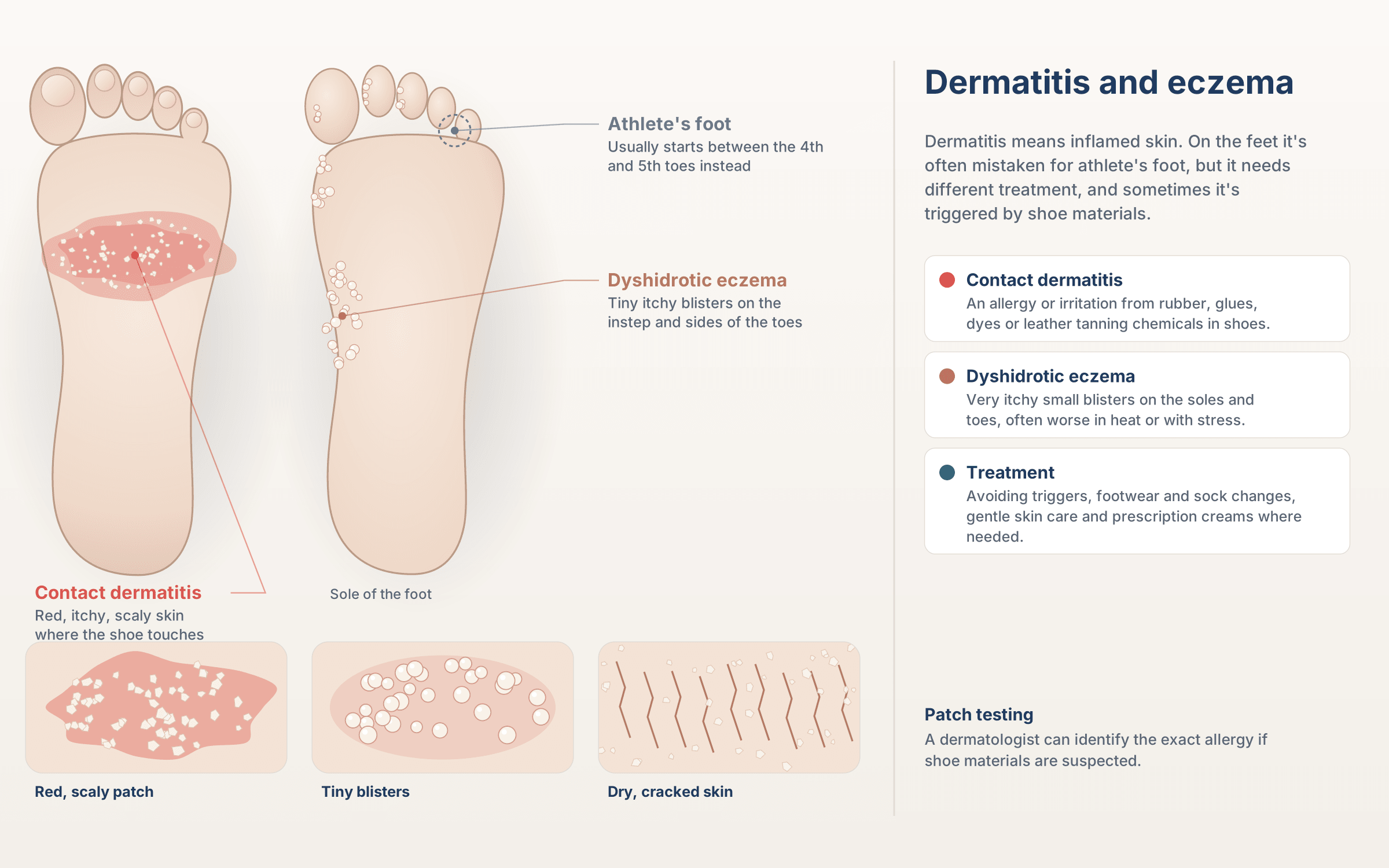
Dermatitis means inflammation of the skin. The words dermatitis and eczema are often used to mean the same thing. On the feet, dermatitis can cause redness, itching, dryness, scaling, cracking and sometimes small blisters. Because it looks similar to athlete’s foot, it’s often treated with antifungal creams that don’t help.
Types of foot dermatitis
- Allergic contact dermatitis: an allergic reaction to something touching the skin, often chemicals in shoes, such as rubber accelerators, adhesives, dyes, chromates used to tan leather, or nickel in buckles. It often affects the top of the foot and toes, matching where the shoe touches.
- Irritant contact dermatitis: irritation from sweat, friction, harsh soaps or wet socks, without an allergy.
- Atopic eczema: part of a wider tendency to eczema, often with asthma or hay fever.
- Dyshidrotic eczema (pompholyx): small, very itchy blisters on the soles and sides of the toes, often worse in hot weather or with stress.
- Juvenile plantar dermatosis: shiny, cracked skin on the front of the soles in children, linked to sweaty feet and synthetic shoes and socks.
- Psoriasis: a different skin condition that can cause thick, scaly patches on the feet and affect the nails.
What causes foot dermatitis?
- Shoe materials: rubber, glues, leather tanning chemicals and dyes
- Sweaty feet and non-breathable shoes and socks
- Wet socks and shoes
- Harsh soaps, detergents and some topical creams
- A personal or family history of eczema, asthma or hay fever
- Hot weather and stress, which can trigger flare-ups
Symptoms to look out for
- Red, inflamed patches of skin
- Intense itching
- Dry, scaly, flaky or thickened skin
- Cracks or fissures
- Small, fluid-filled blisters
- Weeping or crusting skin
- A rash that matches the shape of your shoe, sandal straps or socks
See us or your GP if the skin is very red, hot, swollen or oozing pus, as this may mean a bacterial infection, or if the rash is spreading to other parts of the body.
How is foot dermatitis diagnosed?
Your podiatrist will look at the pattern of the rash, ask about your footwear, socks, skin care and history of eczema or allergies, and examine your shoes. Where athlete’s foot is possible, we may take a skin scraping to test for fungus, as the two can look very alike. If an allergy to shoe materials is suspected, we may recommend patch testing with a dermatologist to identify the exact trigger.
How we treat foot dermatitis
- Identify and avoid triggers: changing to shoes made from different materials, using socks as a barrier, and avoiding irritants
- Footwear advice: breathable shoes, alternating pairs so they dry out, and allergy-friendly options where needed
- Sock advice: cotton or moisture-wicking socks, changed daily or more often
- Skin care: gentle, soap-free washing, and regular use of a thick, fragrance-free moisturiser to repair the skin barrier
- Managing sweaty feet, which can trigger or worsen dermatitis
- Prescription creams: anti-inflammatory creams, where appropriate, prescribed by our podiatrist endorsed for scheduled medicines or by your GP
- Treating cracks and infection promptly
- Referral: to your GP or a dermatologist for widespread, severe or persistent dermatitis, or for patch testing
Dermatitis & Eczema FAQs
They can look very similar. Athlete’s foot usually starts between the toes, while contact dermatitis often affects the top of the foot where shoes touch. A skin scraping can confirm whether fungus is present.
Yes. Chemicals in rubber, glues, dyes and leather tanning are common causes of allergic contact dermatitis on the feet. Patch testing can identify the exact trigger.
A thick, fragrance-free moisturiser or ointment, applied at least once a day, helps repair the skin barrier. Your podiatrist can recommend options.
Dermatitis can flare up again, especially if the trigger isn’t avoided. Identifying the cause and looking after the skin barrier reduces flare-ups.
No, you can book directly. If your appointment is through a Medicare care plan, DVA or another funded program, you’ll need a referral, so check with us when you book.
Serving Manly and the Northern Beaches.
Manly Foot Clinic is at Shop 3/3 Corrie Rd, North Manly NSW 2100. We see patients from Manly, Balgowlah, Freshwater, Dee Why and Brookvale through to Mosman, Neutral Bay, Chatswood and the wider North Shore.