What is peripheral neuropathy?
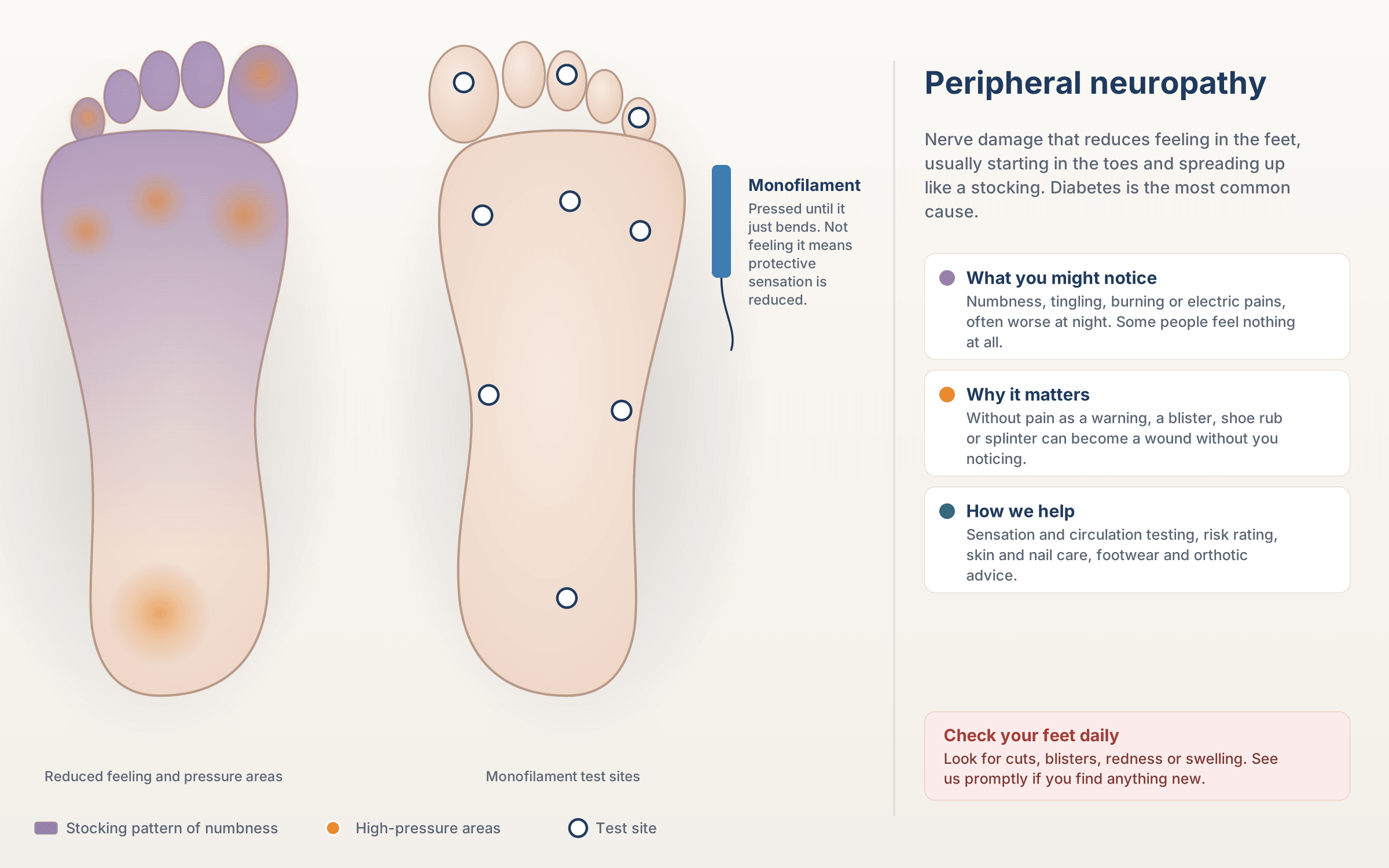
The peripheral nerves carry messages between your brain and spinal cord and the rest of your body. Neuropathy damages these nerves, usually starting with the longest nerves, the ones that reach the toes. Symptoms often begin in the toes and spread slowly up the feet and legs in a “stocking” pattern, and can later affect the hands.
Neuropathy can affect three types of nerves:
- Sensory nerves: causing numbness, tingling, burning or pain, and loss of protective feeling
- Motor nerves: causing weakness in the foot muscles, which can lead to clawed toes and high-pressure areas
- Autonomic nerves: causing dry, cracked skin because the feet stop sweating normally
What causes peripheral neuropathy?
- Diabetes: the most common cause in Australia
- Alcohol: long-term heavy drinking
- Vitamin deficiencies, especially vitamin B12
- Chemotherapy and some other medications
- Kidney disease and underactive thyroid
- Autoimmune and inflammatory conditions
- Infections, such as shingles or HIV
- Inherited conditions, such as Charcot-Marie-Tooth disease
- Nerve compression and injury
- Unknown cause (idiopathic): in some people, no cause is found
Symptoms to look out for
- Numbness or reduced feeling in the toes and feet
- Tingling, pins and needles, or a feeling of wearing socks when you’re not
- Burning, stabbing or electric shock-like pain, often worse at night
- Extreme sensitivity to touch, such as bedsheets on the feet
- Poor balance and unsteadiness, especially in the dark
- Weakness in the feet and toes, and changes in foot shape such as clawed toes
- Dry, cracked skin
- Cuts, blisters or sores you didn’t notice happening
Seek prompt care for any wound, blister, swelling, redness or warmth on a numb foot, especially if you have diabetes. A hot, red, swollen foot without obvious injury can be a sign of Charcot foot, which needs urgent assessment.
How is peripheral neuropathy assessed?
Your podiatrist will ask about your symptoms and medical history and perform a neurological assessment of your feet, including:
- Monofilament testing: a fine nylon filament pressed on set points of the foot to test protective feeling
- Vibration testing, with a tuning fork or a biothesiometer
- Sharp and blunt, hot and cold sensation
- Reflexes and muscle strength
We also check the circulation in your feet with a vascular assessment, examine your skin, nails and foot shape for pressure areas, and assess your footwear. From this, we work out your risk level and how often you should be checked. We communicate the results to your GP, who can arrange blood tests and specialist referral to investigate the cause.
How we care for feet with neuropathy
Nerve damage often can’t be reversed, so the focus is on protecting your feet, managing symptoms and treating the cause with your GP.
- Regular podiatry checks, at a frequency matched to your risk
- Skin and nail care: safe removal of corns and callus, which can hide wounds underneath, and nail care, to prevent sores
- Footwear: properly fitted shoes with room for your toes and no pressure points, and advice on what to avoid
- Custom orthotics, made from a 3D scan of your feet, to redistribute pressure away from high-risk areas
- Education: how to check your feet daily, moisturise dry skin and act quickly on any problem
- Wound care, with prompt treatment and referral if a sore develops
- Balance and strength advice to reduce the risk of falls
- Working with your GP and specialists on the cause and on medications for nerve pain
Daily foot care with neuropathy
- Check your feet every day, including between the toes and the soles, using a mirror if needed
- Wash your feet daily and dry carefully between the toes
- Moisturise the skin, but not between the toes
- Never walk barefoot, including at home and on the beach
- Check inside your shoes for stones or rough seams before putting them on
- Test bath water with your elbow, and avoid hot water bottles and heat packs on your feet
- Don’t cut corns yourself or use corn plasters with acid
Peripheral Neuropathy FAQs
Sometimes, if the cause is treated early, such as vitamin B12 deficiency. In many cases, though, the damage is long-lasting, so protecting your feet becomes the priority.
Because neuropathy reduces feeling, you may not notice a cut, blister or pressure area until it becomes a serious wound. Daily checks catch problems early.
Well-fitted shoes with a deep, wide toe box, soft uppers, cushioning and no internal seams. We’ll check your shoes and advise you.
It depends on your risk level. We’ll set a schedule based on your nerve and circulation assessment, which may range from once a year to every few weeks.
No, you can book directly. If your appointment is through a Medicare care plan, DVA or another funded program, you’ll need a referral, so check with us when you book.
Serving Manly and the Northern Beaches.
Manly Foot Clinic is at Shop 3/3 Corrie Rd, North Manly NSW 2100. We see patients from Manly, Balgowlah, Freshwater, Dee Why and Brookvale through to Mosman, Neutral Bay, Chatswood and the wider North Shore.