
What are cracked heels?
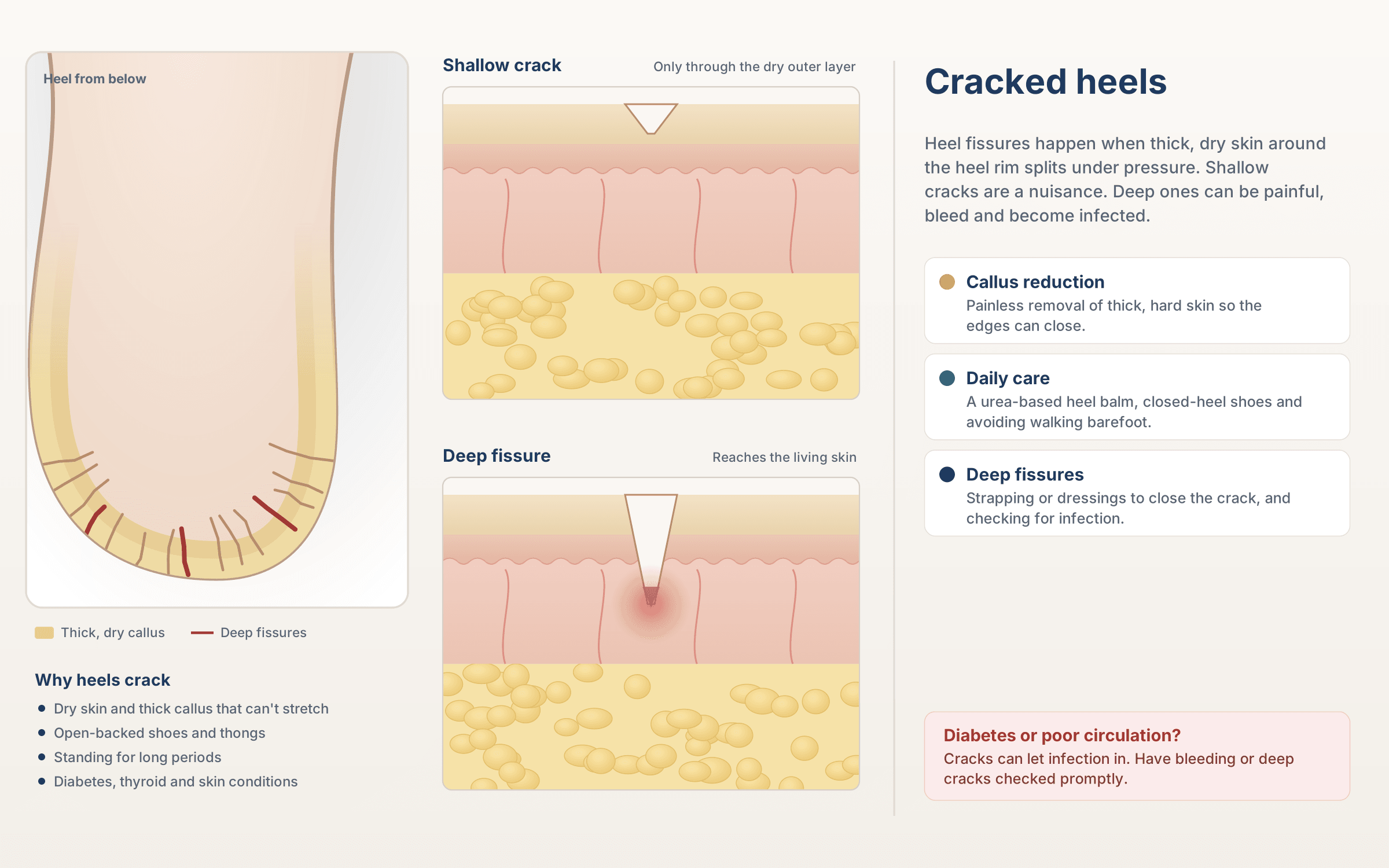
Cracked heels (heel fissures) form when the skin around the edge of the heel becomes dry and thickened (callused). This thick skin is less flexible, so when the fat pad under the heel expands sideways with each step, the hard skin splits. Shallow cracks are usually just unsightly, but deep fissures can reach the living layers of skin, causing pain and bleeding.
What causes cracked heels?
- Dry skin, especially in older age and in hot, dry or very cold weather
- Open-backed shoes and thongs, which let the heel fat pad spread sideways
- Walking barefoot
- Standing for long periods, especially on hard floors
- Body weight, which increases pressure on the heel
- Diabetes and thyroid conditions, which affect the skin’s moisture
- Skin conditions, such as eczema, psoriasis and athlete’s foot
- Long, hot showers and harsh soaps, which strip the skin’s natural oils
- Not moisturising regularly
Symptoms to look out for
- Thick, dry, yellowish skin around the rim of the heel
- Visible cracks or splits in the skin
- Pain when standing or walking, especially with deep cracks
- Bleeding from the cracks
- Itching or flaking skin
- Redness, swelling, warmth or discharge, which can be signs of infection
Take extra care if you have diabetes or poor circulation. Deep cracks can become infected or turn into ulcers, so see a podiatrist promptly.
In the clinic
- Debridement: your podiatrist safely removes the thickened, callused skin with a sterile scalpel and file. This is painless and lets the skin underneath heal and moisturisers penetrate.
- Treating fissures: smoothing the edges of cracks so they can close, and dressing deep fissures that are bleeding
- Checking for underlying causes, such as a fungal infection, eczema or psoriasis, which need their own treatment
- Infection care, with referral to your GP if needed
At home
- Moisturise daily with a urea-based heel balm (10 to 25% urea works well), ideally after a shower
- Gently file the heels once or twice a week with a foot file, not a blade
- Wear supportive, closed-back shoes more often, especially while the cracks heal
- Wear socks after moisturising at night to lock in moisture
- Avoid long, hot showers and harsh soaps
- Drink enough water
Preventing cracked heels coming back
- Heel cups or orthotics to stop the heel fat pad spreading sideways
- Regular podiatry visits to keep the callus under control, especially in summer
- Footwear with a closed back for daily wear
Cracked Heels FAQs
Gentle filing at home is fine, but don’t use blades or callus shavers, which can cut too deep and cause infection. A podiatrist can safely remove thick skin.
A moisturiser containing urea, used daily, is one of the most effective treatments. Your podiatrist can recommend a strength that suits your skin.
Thongs, sandals and open-backed shoes let the heel fat pad spread with each step, and combined with dry skin, this splits thickened skin. Wearing closed-back shoes more often and moisturising daily helps.
Usually not, but deep cracks can bleed and become infected, which is a particular concern if you have diabetes or poor circulation.
No, you can book directly. If your appointment is through a Medicare care plan, DVA or another funded program, you’ll need a referral, so check with us when you book.
Serving Manly and the Northern Beaches.
Manly Foot Clinic is at Shop 3/3 Corrie Rd, North Manly NSW 2100. We see patients from Manly, Balgowlah, Freshwater, Dee Why and Brookvale through to Mosman, Neutral Bay, Chatswood and the wider North Shore.