What are corns and calluses?
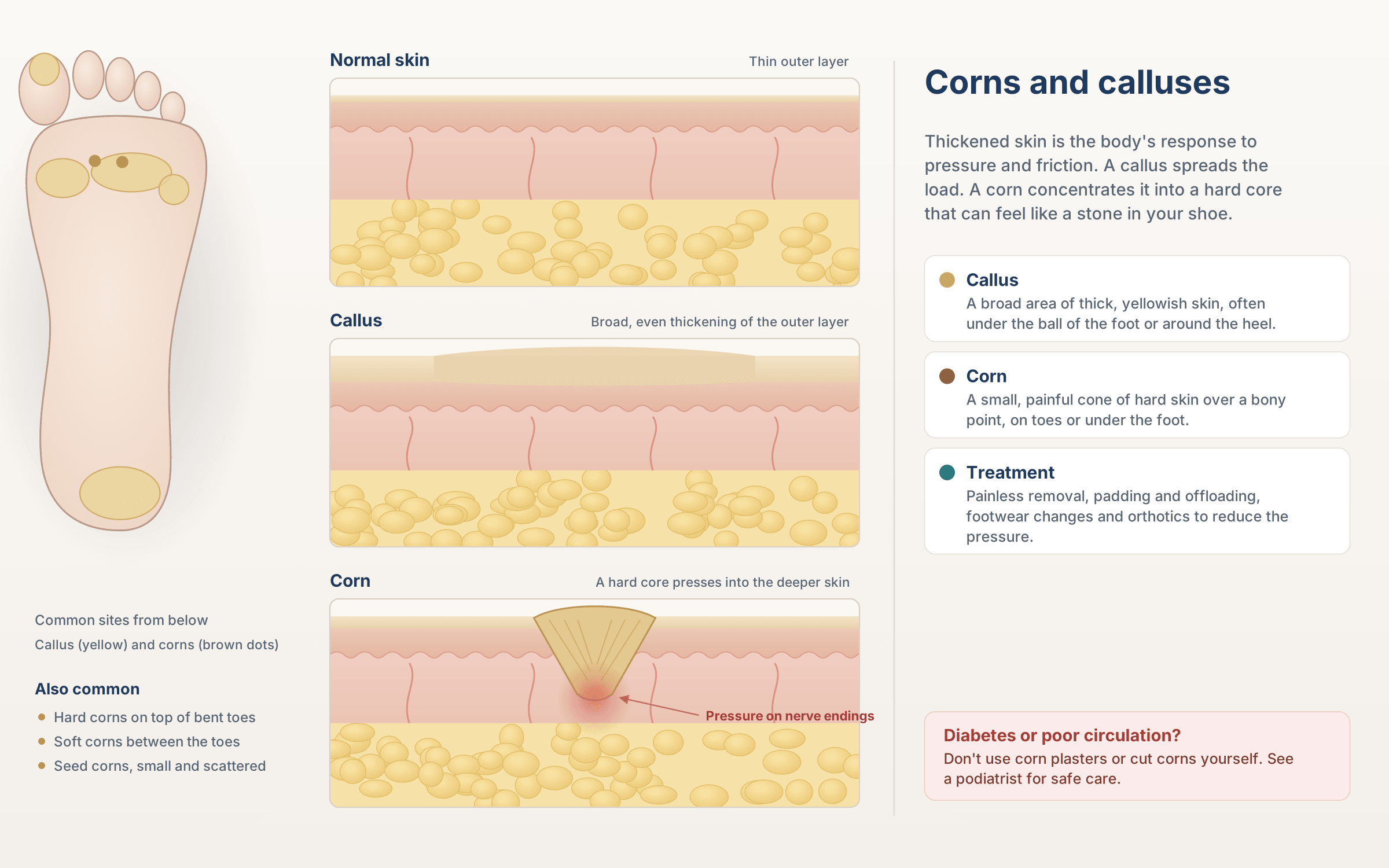
When skin is repeatedly pressed or rubbed, it protects itself by thickening. This is normal, but when it builds up too much, it becomes painful.
- Callus: a broad, flat area of thickened, often yellowish skin, usually under the ball of the foot, on the heel or on the side of the big toe. Callus is often painless, but can ache or burn when thick.
- Hard corn (heloma durum): a small, concentrated area of hard skin with a dense central core that presses into the deeper tissues. Corns are often found on the tops and tips of toes and under the ball of the foot, and can be very painful.
- Soft corn (heloma molle): a white, rubbery corn between the toes, kept soft by moisture. Most common between the fourth and fifth toes.
- Seed corns: tiny corns, often on the sole, linked to dry skin.
- Intractable plantar keratosis (IPK): a deep, painful corn under the ball of the foot that keeps coming back, usually over a prominent metatarsal head.
- Nail corn: a corn in the groove beside the toenail.
What causes corns and calluses?
- Footwear: tight, narrow, short or high-heeled shoes, and seams or stitching that rub
- Toe deformities: hammer toes, claw toes and bunions, which create pressure points
- Foot structure: high arches, flat feet or a prominent metatarsal head
- The way you walk, which can concentrate load on certain areas
- Bony prominences, such as a bone spur on a toe
- Thinning of the fat pad under the ball of the foot with age
- Not wearing socks, or walking barefoot
- Dry skin
- Smoking, which is linked to deep, recurring corns under the ball of the foot
Symptoms to look out for
- Thick, hard or yellowish skin on the feet
- A small, hard, painful spot, often with a central core
- Pain when pressed or when walking, often described as a stone in the shoe
- White, rubbery skin between the toes
- Burning under the ball of the foot
Take extra care if you have diabetes, poor circulation or numbness in your feet. Corns and callus can hide ulcers underneath, so never cut them yourself, and see a podiatrist promptly if you notice bleeding, discolouration or discharge under hard skin.
Removal
Your podiatrist uses a sterile scalpel to gently pare away the thickened skin and remove the corn’s core. This is painless, because the skin being removed is dead, and most people feel immediate relief. Callus can also be reduced with a fine file.
Stopping them coming back
Removing a corn relieves the pain quickly, but it will return unless the cause is changed. We’ll:
- Assess your footwear and suggest shoes with a deeper, wider toe box, softer uppers and fewer seams
- Provide padding: silicone toe props, sleeves and separators, and pressure-relieving pads
- Prescribe custom orthotics, made from a 3D scan of your feet, to redistribute pressure away from callused areas
- Recommend skin care: a urea-based moisturiser to keep skin supple
- Treat toe deformities such as hammer toes and bunions that cause pressure
- Set a maintenance schedule for regular removal if needed
Permanent options for recurring corns
Where a corn keeps returning because of a bone spur or toe deformity, Dr Ozan Amir, Surgical Podiatrist, can assess whether surgery is an option to remove the underlying cause. This may include removing a small bone spur, straightening a hammer toe (digital arthroplasty), joining two toes slightly at the base to stop a soft corn between them (partial syndactylisation), or a metatarsal procedure for deep corns under the ball of the foot. Minor procedures are performed at the clinic.
Watch Dr Ozan Amir explain
Permanent Treatment for Painful Corns
Permanent Treatment of Lateral Fifth Toe Corns
Digital Arthroplasty for Permanent Treatment of Interdigital Corns
Partial Syndactylisation for Permanent Treatment of Web Space Corns
Intractable Plantar Keratosis (IPK) and Its Association with Smoking
Corns & Calluses FAQs
No. The thickened skin is dead tissue, so removing it is painless, and most people walk out feeling immediate relief.
We don’t recommend medicated corn plasters. They contain acid that can burn the healthy skin around the corn, and they’re especially risky if you have diabetes or poor circulation.
Corns usually come back unless the pressure causing them is reduced. Footwear changes, padding and orthotics help, and surgery can remove a bony cause for corns that keep returning.
They can look similar. A corn usually hurts when pressed directly, while a wart often hurts when squeezed from the sides and has tiny black dots. Your podiatrist can tell the difference.
It varies. Some people need treatment every 6 to 8 weeks, while others only occasionally, once the cause is addressed.
No, you can book directly. If your appointment is through a Medicare care plan, DVA or another funded program, you’ll need a referral, so check with us when you book.
Serving Manly and the Northern Beaches.
Manly Foot Clinic is at Shop 3/3 Corrie Rd, North Manly NSW 2100. We see patients from Manly, Balgowlah, Freshwater, Dee Why and Brookvale through to Mosman, Neutral Bay, Chatswood and the wider North Shore.