
Why diabetes affects your feet
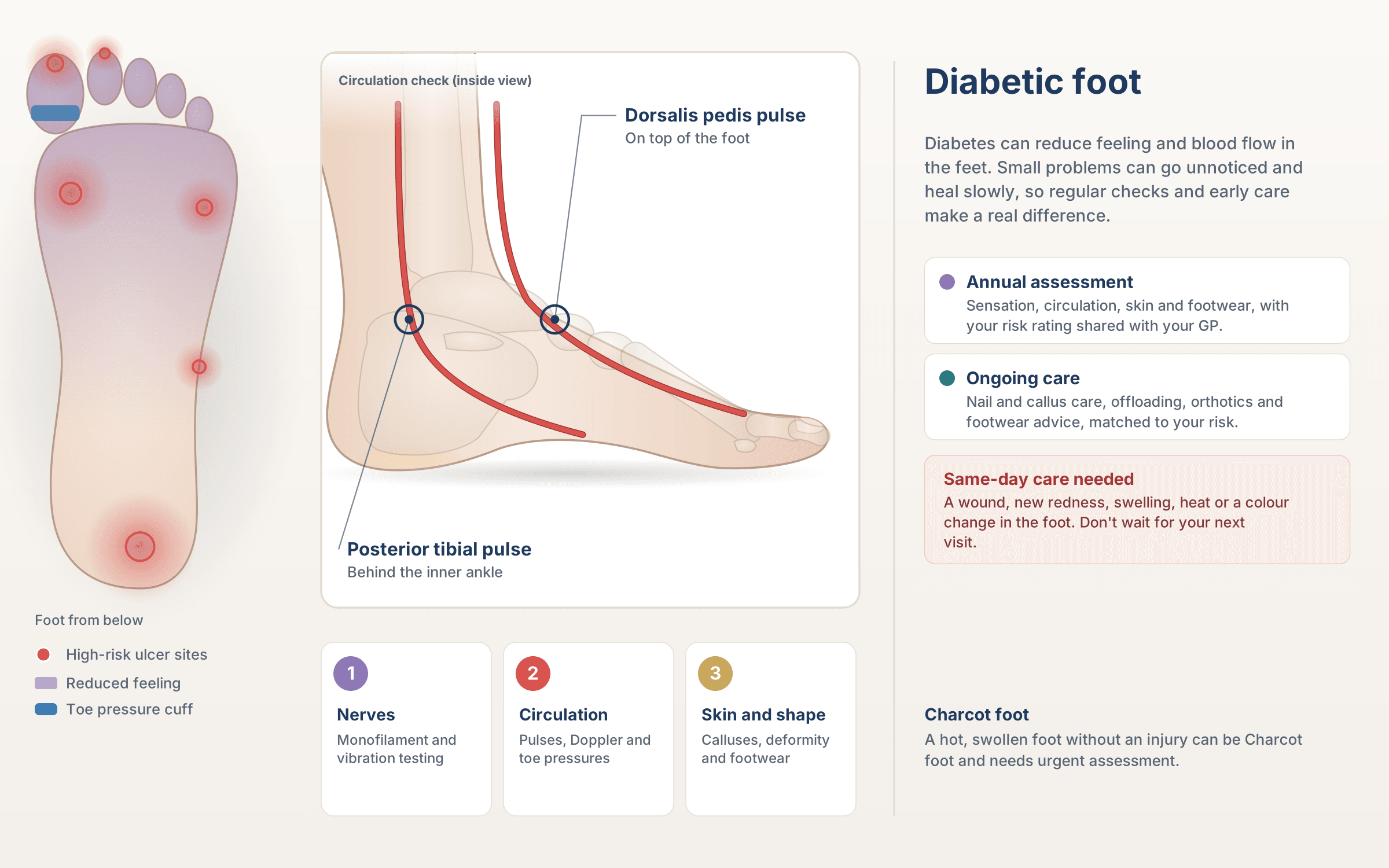
High blood glucose levels over time can damage the feet in three main ways:
- Nerve damage (peripheral neuropathy): reduced feeling means you may not notice a cut, blister, burn or pressure area. It can also weaken the foot muscles and change your foot shape, creating pressure points, and cause dry, cracked skin.
- Reduced circulation (peripheral arterial disease): narrowed arteries mean less blood reaches the feet, so wounds heal slowly and are more likely to become infected.
- Reduced ability to fight infection, so infections can spread quickly.
Together, these increase the risk of foot ulcers, infections and, in severe cases, amputation. Most amputations in people with diabetes start with a foot ulcer, and most of those can be prevented.
Who is at higher risk?
- People who have had diabetes for a long time
- People whose blood glucose levels are often high
- People who smoke
- People with existing nerve damage, poor circulation, kidney disease or vision problems
- People with foot deformities such as bunions, hammer toes or Charcot foot
- Anyone who has had a foot ulcer or amputation before
Signs to look out for
- Numbness, tingling, burning or loss of feeling in the feet
- Cold feet, or pain in the calves when walking that eases with rest
- Dry, cracked skin, especially on the heels
- Corns, callus or blisters
- Changes in the colour or shape of your feet
- Slow-healing cuts or sores
- Ingrown or thickened toenails
Seek urgent care for any wound that isn’t healing, redness, swelling, warmth, discharge or a bad smell, a foot that’s suddenly hot, red and swollen (which can be Charcot foot), or a toe that turns blue, black or very pale.
Our diabetes foot assessment
A comprehensive diabetes foot assessment includes:
- Vascular assessment: checking the pulses and blood flow in your feet, including toe pressure measurements, which are particularly reliable in people with diabetes
- Neurological assessment: testing protective feeling with a monofilament, plus vibration, reflexes and other sensations
- Skin and nail check: looking for corns, callus, cracks, ulcers, infection and nail problems
- Foot structure and footwear: checking for deformities, pressure areas and whether your shoes are protecting your feet
- Risk rating: your results determine your foot risk level (low, moderate or high) and how often you need to be checked
We send a report to your GP, so your foot health is part of your overall diabetes care.
How often should you have a foot check?
Everyone with diabetes should have their feet checked by a health professional at least once a year. If your assessment shows a higher risk, we’ll recommend more frequent checks and ongoing podiatry care, sometimes every few weeks.
Treatment and ongoing care
- Safe removal of corns and callus, which can hide or cause ulcers
- Nail care, including thickened, fungal and ingrown nails
- Treatment of cracked heels and dry skin
- Footwear advice, and help choosing shoes that protect your feet
- Custom orthotics, made from a 3D scan of your feet, to redistribute pressure away from high-risk areas
- Wound care for minor wounds, and prompt referral to a high-risk foot service or your GP when needed
- Education on daily foot checks and care
- Working with your healthcare team, including your GP, endocrinologist and diabetes educator
Daily foot care with diabetes
- Check your feet every day, including the soles and between the toes, using a mirror if needed
- Wash your feet daily and dry carefully, especially between the toes
- Moisturise dry skin, but not between the toes
- Cut toenails straight across, or have a podiatrist do it
- Never walk barefoot, including at home and at the beach
- Wear well-fitted shoes and seamless socks, and check inside your shoes before putting them on
- Don’t use heat packs or hot water bottles on your feet, or medicated corn plasters
- Keep your blood glucose, blood pressure and cholesterol in range, and don’t smoke
Diabetic Foot FAQs
Yes. Our diabetes assessments include a vascular check, with toe pressure measurements, and a neurological check of sensation and reflexes. From the results, we put together a treatment and education plan tailored to your risk. We work with your GP, endocrinologist and diabetes educator so your foot care is part of your overall diabetes management.
At least once a year, and more often if you’re at higher risk. We’ll recommend a schedule based on your assessment.
If your GP has set up a chronic disease management plan, you may be eligible for Medicare rebates for some podiatry visits. Ask your GP and let us know when you book.
If you have good feeling and circulation in your feet and can see and reach them easily, usually yes. If not, a podiatrist should look after your nails.
Well-fitted shoes with a deep, wide toe box, cushioning and no seams inside, with seamless socks. We’ll check your shoes at your assessment.
No, you can book directly. If your appointment is through a Medicare care plan, DVA or another funded program, you’ll need a referral, so check with us when you book.
Serving Manly and the Northern Beaches.
Manly Foot Clinic is at Shop 3/3 Corrie Rd, North Manly NSW 2100. We see patients from Manly, Balgowlah, Freshwater, Dee Why and Brookvale through to Mosman, Neutral Bay, Chatswood and the wider North Shore.